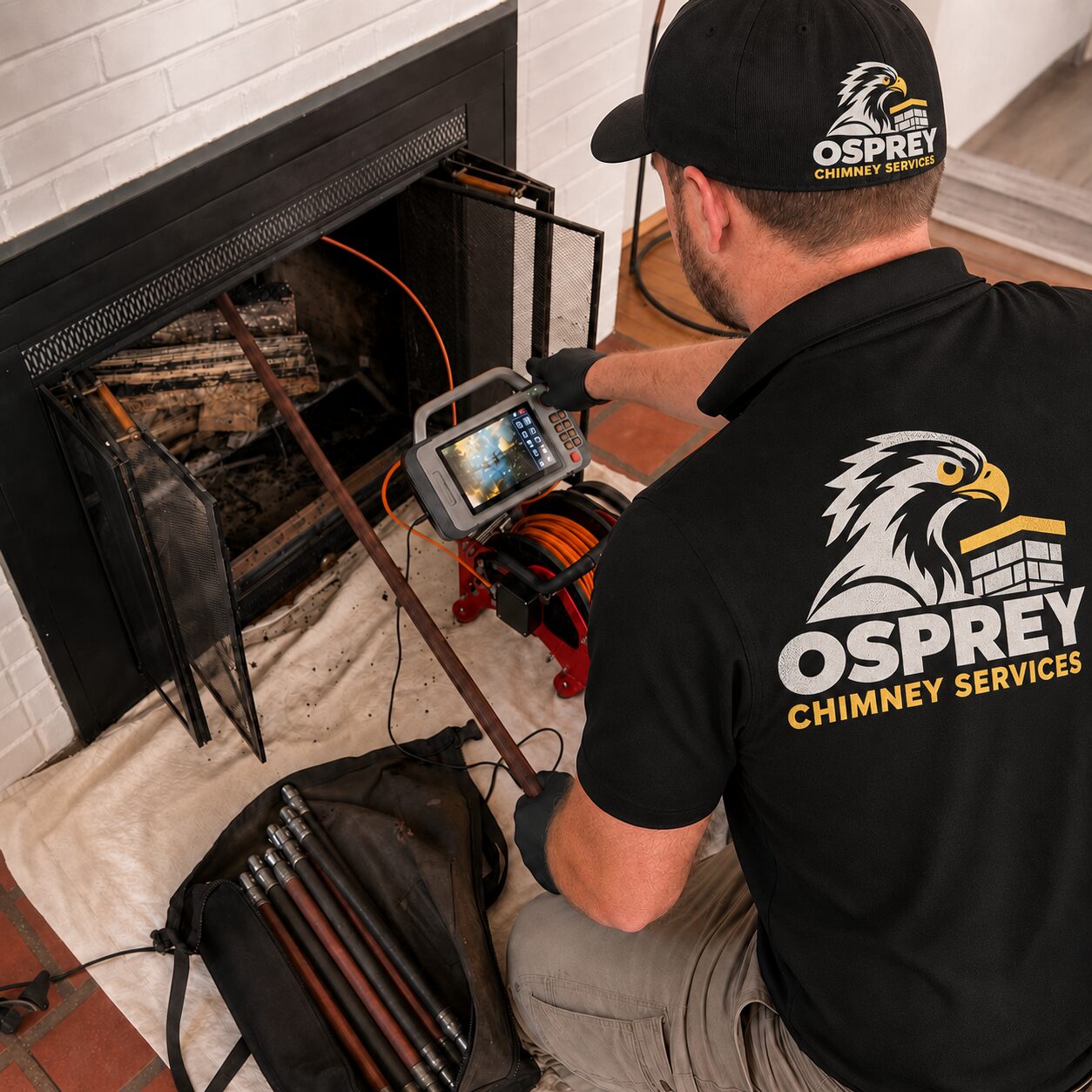
You reach for the fireplace damper on the first cool evening and it will not move as expected. The wrong response is to force it and light a fire anyway. A damper controls an opening in many fireplace systems; if that opening cannot be confirmed for use, keep the appliance off and have the mechanism evaluated. A Lake Worth Beach address does not change that basic decision.
First find the appliance information. A traditional masonry fireplace may have a throat damper above the firebox, while a top-sealing damper sits near the chimney top and uses a control mechanism. Some listed factory-built or gas units work differently. An unfamiliar lever does not mean the system has the damper you saw in an online video. Consult the owner's manual and only operate accessible controls as described there.
Record what happens without forcing a mechanism
Does the control move partly, freely with no obvious response, or not at all? Has the fireplace been unused through the rainy season? Was there a water mark or debris in the opening? Did the problem begin after repair work? A technician can use those details to decide whether the issue concerns the control, linkage, damper plate, obstruction or a different component. Photos of the visible handle and full fireplace opening help. Do not reach into a sooty throat or pull on a cable beyond ordinary use.
A throat-damper repair and a top-sealing damper installation are not automatically interchangeable. The suitability of a top unit depends on the flue, cap arrangement, appliance and overall chimney condition. A new top component will not cure every draft or moisture problem elsewhere in the structure. Ask what is failing now, how the proposed part operates, and how future access or sweeping will be handled.
Questions for a repair estimate
- Is the damper damaged, obstructed or merely difficult to operate?
- Is the fireplace otherwise suitable for use, or does it need a separate inspection?
- Which parts are included in the damper repair scope?
- Does the proposal change cap or chimney-top protection?
- What operation was verified after the work?
Keep a record of the chosen system so a future homeowner knows how it operates. If smoke enters the room, the control will not open as intended or the fireplace's history is unknown, do not interpret a repaired handle as a complete safety inspection. The damper is one part of the vent path, not the whole fireplace.
Decide whether the damper issue is isolated
A damper problem may be the first visible sign that a fireplace has sat through moisture exposure or that debris entered the flue. It may also be a mechanical issue limited to the control. Ask whether the technician will evaluate surrounding accessible areas rather than immediately installing a new handle. If there is soot, water, a bird nest or a recent draft change, give that history at booking. The proposed repair should explain the observed cause and whether the vent requires separate cleaning or inspection.
A top-sealing damper can also be confused with a chimney cap. Depending on the system, the top component may combine functions or sit alongside a cap; its specification and operating cable must be suitable for the flue. Ask whether the proposal changes rain protection or animal screening and how those parts will be maintained. A quote that merely says “install top damper” should identify product, controls and compatibility.
Before the visit, do not oil an unknown mechanism or wedge it open. Products introduced into a hot or listed fireplace system can cause unintended problems, and a stuck plate may be a symptom rather than a surface-friction issue. It is safer to describe what moves and what does not, then let a qualified person evaluate it. If the control is attached to a gas system, follow the actual manufacturer instructions; advice for a masonry wood throat damper may not apply.
Once repaired, ask the technician to show you the normal operating position and to record it in the invoice. A guest or future owner should not have to guess whether a handle points to “open” or “closed.” A small operation note can prevent the same confusion from returning next season.
Further reading: CSIA Homeowner Resources.