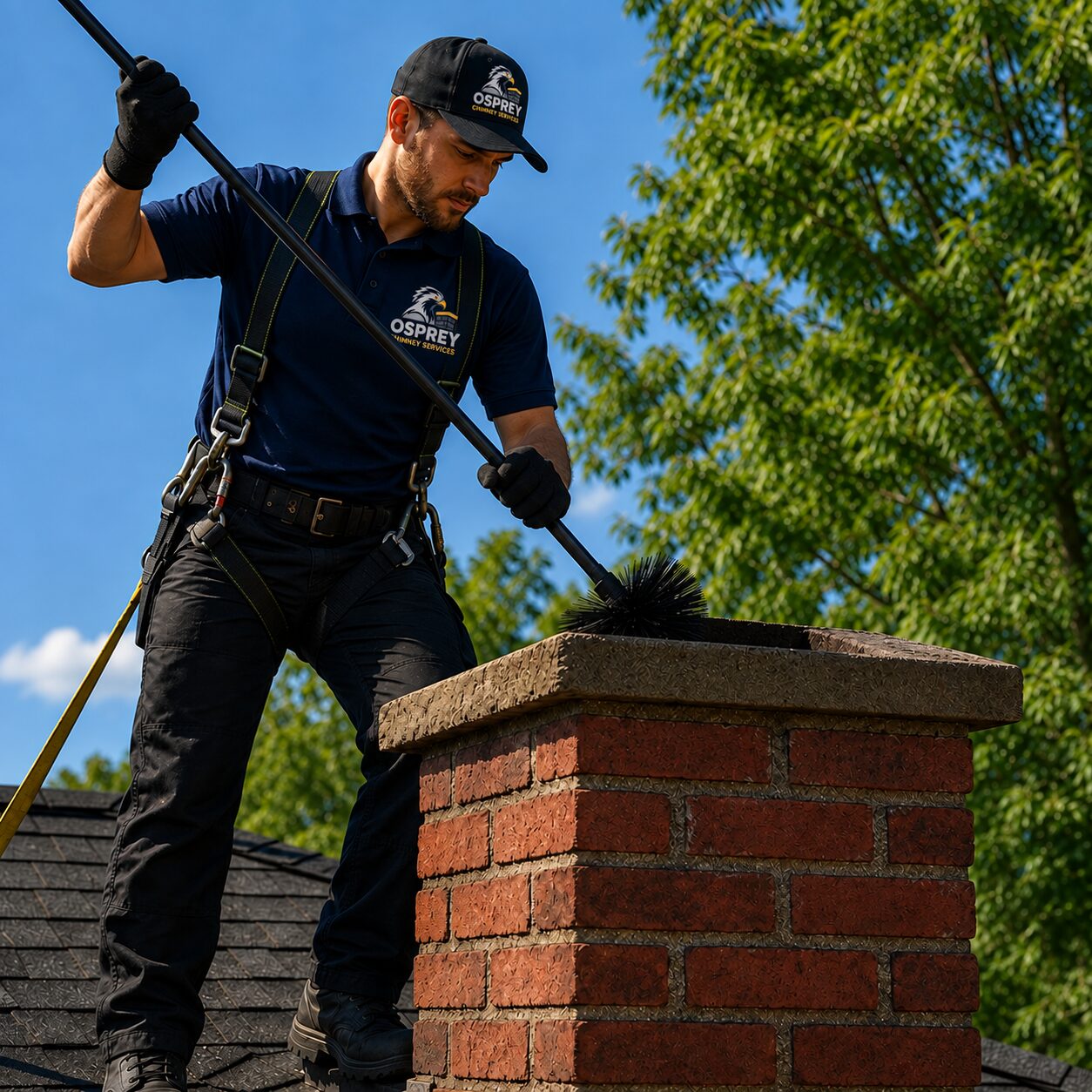
Homeowners often picture a chimney cleaning as wiping out the firebox. The part that matters most is the flue liner running the full height of the chimney, where soot and creosote build up out of sight. Our sweep addresses the whole system — firebox, damper area, smoke chamber and the length of the flue — and we set up containment so the dust stays in the fireplace, not your living room.
What homeowners notice
- A campfire or tarry smell coming from the fireplace, stronger on humid South Florida days
- Black, flaky or shiny buildup on the damper or upper firebox walls
- Smoke rolling back into the room when you light a fire
- You've burned several cords since the last cleaning, or don't remember the last one
How we diagnose it
- We look at the firebox, damper and, where accessible, up into the flue to judge how much and what type of buildup is present
- We identify the deposit — light soot versus hardened, glazed creosote behaves very differently and changes the method
- We confirm the flue type and size so brushes and rods match the liner and don't damage it
- If we find cracking, gaps or heavy glazing during the sweep, we tell you and show you photos rather than just brushing past it
Your options — and their limits
Standard sweep
Rod-and-brush cleaning with a HEPA vacuum and containment for typical soot and light-to-moderate creosote. This is the routine maintenance most homeowners need.
Heavier buildup
Glazed, third-degree creosote doesn't brush off. It needs specialized treatment or, in some cases, evaluation for whether the flue is safe to use — a sweep alone won't make it safe.
Sweep plus inspection
Pairing a cleaning with a Level 1 inspection is the honest way to confirm the flue is both clean and sound. Cleaning removes buildup; it does not by itself prove a chimney is safe.
What affects the price
We don't post flat prices, because an honest number depends on what we actually find. These are the factors that move it:
- How much and what kind of buildup is present (light soot sweeps faster than hardened creosote)
- Chimney height and access — a steep tile roof takes more setup than a low-slope roof
- Number of flues and whether the system also serves an insert or stove
- Whether we find a problem that needs its own repair quote, which we'd present separately
When to stop using the system and get it evaluated
- You see glazed, shiny black creosote — this is highly flammable and needs evaluation before another fire
- There's a strong burning smell during use, or you've had a chimney fire (even a small 'rumble')
- Smoke won't draft up and pushes into the room
How to prepare for the visit
- Let the fireplace go cold for at least 24 hours before the appointment
- Clear a few feet in front of the fireplace and move nearby rugs or delicate items
- Note anything you've noticed — odor, smoke, animals — so we can check for it
Applies to
Questions homeowners ask
How often should a chimney be swept?
It depends on how much you burn and what you burn, not the calendar alone. A yearly inspection is the reliable way to know whether a sweep is due — some homes need cleaning every season, others less often.
Does a clean chimney mean a safe chimney?
No. Cleaning removes buildup, but it doesn't reveal cracks, gaps or liner damage. That's why we recommend pairing a sweep with an inspection.
Will it make a mess in my house?
We use drop cloths, seal the opening and run a HEPA vacuum during the sweep so the work stays contained to the fireplace.
Related services
Chimney Inspection · Level 1 Chimney Inspection · Fireplace Cleaning · Chimney Relining
Serving South Florida
We provide chimney cleaning across Palm Beach, Broward and Miami-Dade. A few of the areas we serve:
Talk to a South Florida chimney technician
Not sure whether it's a cleaning, a repair, or something to look at before your next fire? Tell us what you're noticing and we'll help you figure out the right next step.