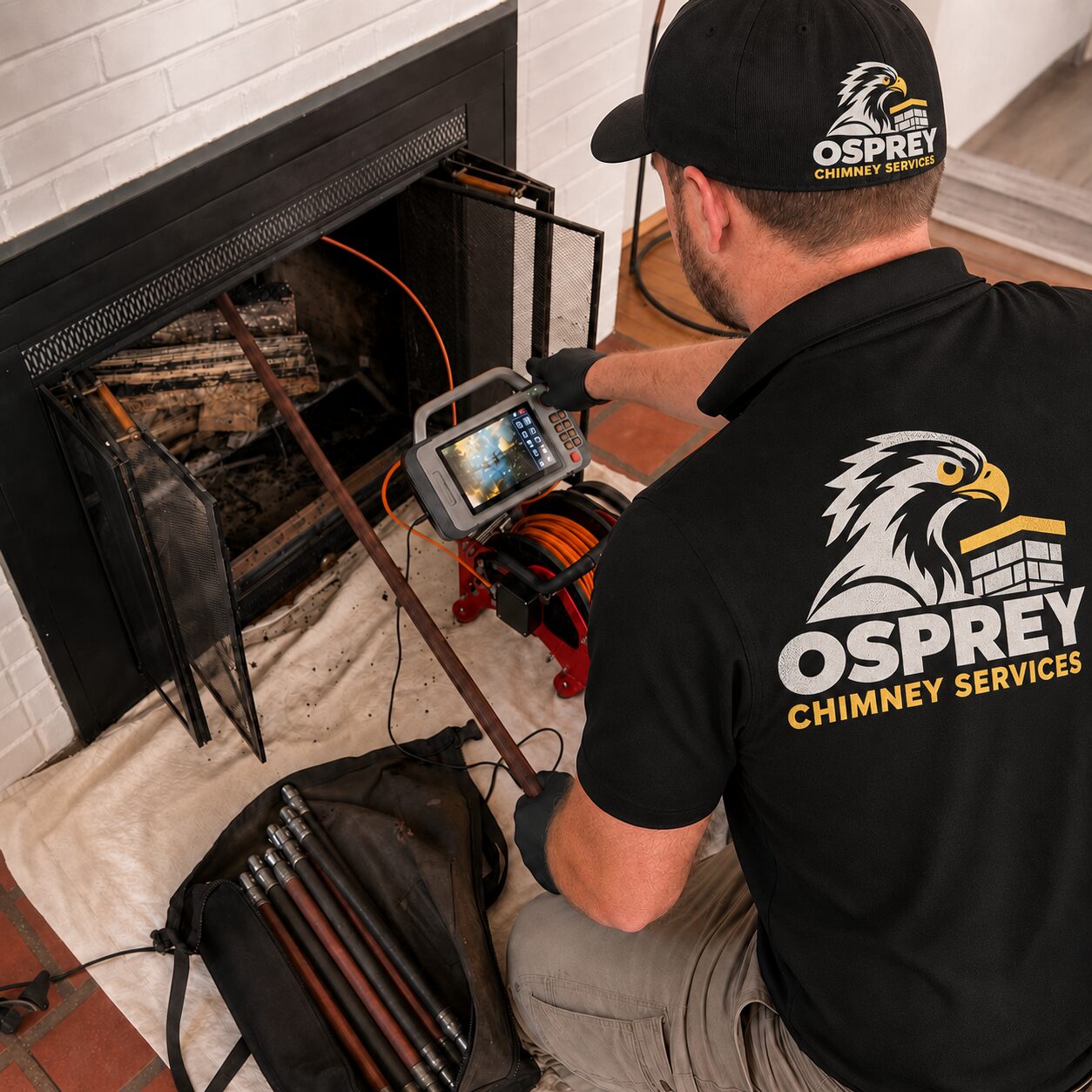
An inspection answers a simple question: is this chimney and fireplace safe to use as-is, and if not, what needs attention first? We examine the accessible parts of the system — firebox, damper, flue, connections and the exterior at the roof — and translate what we see into a documented recommendation you can actually act on. We never call a chimney safe simply because it was cleaned, and we don't invent problems to sell work.
What homeowners notice
- You're buying or selling a home with a fireplace and need to know its condition
- The fireplace hasn't been used in years and you'd like to use it again
- You've noticed smoke, odor, staining or debris and want it looked at
- It's been a season or more and you want a baseline before winter guests arrive
How we diagnose it
- Firebox and damper: condition of firebrick, mortar joints and the damper's operation
- Flue: buildup, obstructions and visible liner condition in accessible areas
- Connections and clearances where the appliance or insert meets the chimney
- Exterior at the roofline: crown, cap, flashing and the masonry or chase we can safely reach
Your options — and their limits
Level 1
For a system in routine use with no changes, covering readily accessible areas. The right starting point for most homeowners.
Level 2
Added when there's a property sale, a system change, or a reason to look closer — including video scanning of the flue.
Documented findings
Either way, you receive a clear summary of what we found and a prioritized recommendation, not a vague 'looks fine.'
What affects the price
We don't post flat prices, because an honest number depends on what we actually find. These are the factors that move it:
- The inspection level called for by your situation
- Chimney height, roof type and how accessible the system is
- Whether video scanning of the flue is warranted
- Number of flues or appliances tied into the chimney
When to stop using the system and get it evaluated
- You smell smoke inside the house when the fireplace isn't lit
- You see loose masonry, a leaning chimney, or debris falling into the firebox
- You've had any chimney fire, however brief
How to prepare for the visit
- Let the system go cold before the visit
- Have any prior inspection reports or repair records handy
- Clear access to the fireplace and, if possible, note where the chimney exits the roof
Applies to
Questions homeowners ask
What's the difference between an inspection and a cleaning?
A cleaning removes buildup. An inspection evaluates whether the system is sound and safe. You can have a spotless flue with a cracked liner — only an inspection would catch that.
Will I get something in writing?
Yes. We document findings and give you a prioritized, plain-language recommendation you can keep and refer back to.
Do I need one before selling my house?
It's a smart step. A real estate fireplace inspection gives buyers and sellers a clear, current picture of the system's condition.
Related services
Level 1 Chimney Inspection · Level 2 Chimney Inspection · Chimney Camera Inspection · Real Estate Fireplace Inspection
Serving South Florida
We provide chimney inspection across Palm Beach, Broward and Miami-Dade. A few of the areas we serve:
Talk to a South Florida chimney technician
Not sure whether it's a cleaning, a repair, or something to look at before your next fire? Tell us what you're noticing and we'll help you figure out the right next step.