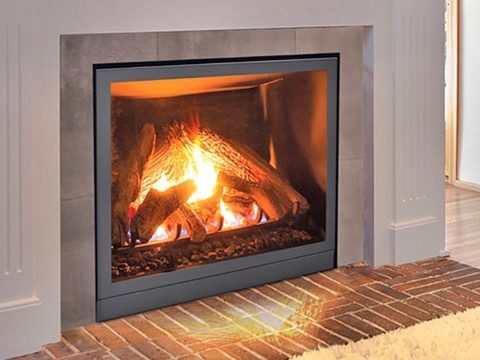
People often say “gas fireplace” when they mean three quite different projects. A decorative log set can be installed in an appropriate existing fireplace under its product instructions. A gas insert is designed for a suitable existing opening but is a separate appliance with its own venting requirements. A new gas fireplace may be an entirely new listed unit and installation. A Palm Beach Gardens homeowner looking at showroom photos should separate these categories before comparing prices or construction schedules.
Start with the space you already have. Is there a masonry fireplace or a factory-built wood unit? Is there a chimney and what condition is it in? Could the existing system legally and physically accept the product you want? A log set photographed in a large masonry opening is not proof it belongs in every factory-built firebox. An insert's dimensions are only one fit question; access, clearance, venting and manufacturer instructions also matter.
Compare the questions, not just the appearance
| Option | Homeowner's first question | Installer's crucial check |
|---|---|---|
| Gas log set | Is my existing fireplace suitable for this specific set? | Listing, fuel, venting and existing firebox condition |
| Gas insert | Will the model fit and function in my existing opening? | Listed application, vent path, clearances and services |
| New gas fireplace | Where will the complete appliance go? | Framing, vent termination, gas/electrical work and approvals |
A salesperson may reasonably discuss flame appearance and controls. A qualified installer must address the parts hidden behind that presentation. NFI's homeowner information distinguishes gas log sets, fireplaces and inserts, and explains why planning venting systems requires technical expertise. Ask what is included in a proposal: the appliance, installation labor, gas supply, any electrical work, venting, permits where applicable and finish repair. If one quote includes a new vent and the other assumes an existing one, they are not directly comparable.
What is the purpose?
If the main goal is ambience on an occasional South Florida evening, say so. If it is usable room heat, say that instead. Do not assume every attractive gas flame has the same heating performance; compare the selected model's published specifications and the room's needs with a qualified professional. The existing fireplace may also need an inspection before conversion, particularly if its history is unknown.
Bring photos of the full opening, an accessible model label, approximate dimensions for discussion, and any prior chimney report. Measurements you take yourself are planning aids, not a substitute for site measurements. For a managed property, ask about building approval and vent access early. A sound fireplace insert installation discussion starts with the particular unit and structure, not a generic promise that “any fireplace can be converted.”
What a useful estimate should compare
If you request several options, ask the installer to put them in the same format: named product, fuel type, included vent components, gas and electrical work, finish restoration, permits or inspections as applicable, and the warranty actually provided. Otherwise a low-priced log-set proposal and a higher-priced insert installation can look like competing offers when they deliver different outcomes. The comparison should make the differences explicit.
A gas insert may sit inside a suitable existing fireplace, but the trim covering the opening is not the whole project. Ask how the existing chimney is evaluated and what vent arrangement the chosen model requires. A new gas fireplace in a different location might need a new vent route and construction work rather than reusing the old hearth. A log set may leave much of the original fireplace in service. These distinctions affect who must perform the work and what future maintenance will involve.
Discuss operation in the South Florida context. A fireplace used only occasionally can still require manufacturer-directed maintenance and an inspection plan. Ask for a demonstration of normal controls and a copy of the manual when work is complete. If the home is rented or sold, those documents will help the next person avoid guessing at a switch or control. A decorative flame is still an appliance with fuel and venting requirements.
Do not let a product brochure's heating claim become a promise about a particular room. Room size, home layout and model performance matter. A qualified installer can explain specifications and site suitability; the homeowner should tell them whether appearance, comfort or ease of use drives the choice.
Further reading: National Fireplace Institute Homeowner Resources.