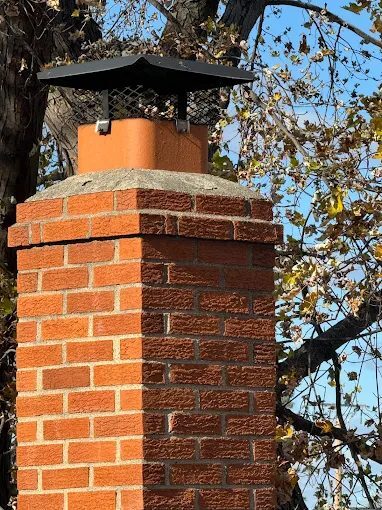
A roofer's photo shows a piece of metal at the top of your chimney. Is it a cap or a chase cover? A mason mentions a “crown,” but your fireplace is a factory-built unit in a framed enclosure. These terms matter because they refer to different parts, and a repair aimed at the wrong one can leave the original water path open.
Think of the assembly from the flue outward. The flue is the path carrying combustion products away. A chimney cap sits over the flue opening and may include screening; it is selected for a particular opening and system. A masonry crown is the top surface spanning the masonry structure around the flue. A chase cover is a formed metal top over a framed chase housing a factory-built chimney. Not every home has all three. Flashing, lower down where the structure meets the roof, is another distinct part.
Which question belongs to which part?
| Visible clue | Questions to ask a professional |
|---|---|
| Opening appears uncovered | What flue and cap type is compatible? Is debris already inside? |
| Cracks at the top of brickwork | Is the masonry crown sound, and where does water go? |
| Rust streaks down a framed chase | Is the cover, seam, fastener or another metal part deteriorating? |
| Staining begins near roof intersection | Has the flashing and adjacent roofing been inspected? |
The table is a question guide, not a remote diagnosis. Pompano Beach includes inland and coastal properties; exposure varies by distance and orientation. For a site near salt spray, discuss corrosion-resistant materials and compatible fasteners rather than trusting a generic “lifetime” label. FEMA's coastal guidance notes that salt spray accelerates corrosion of exposed metal. That general principle does not prove a particular cover failed from salt.
Why fit matters more than an attractive photo
A cap chosen only for appearance may not suit the flue or appliance listing. A chase cover must fit the chase and allow water to shed properly; an improvised flat sheet can create different problems. A crown repair must account for how it meets the flue and brickwork. Ask a provider what system you have, what component is being specified, and why the material and attachment method fit that system. The National Fireplace Institute emphasizes product-specific installation and venting decisions for hearth equipment.
Do not climb onto a roof to identify the part yourself. From the ground, note the general shape and take a zoomed photo if safe. If water is already visible inside, ask for a broader chimney leak assessment, not just a cap installation quote. A good answer identifies both the part and the reason it is the relevant part.
Make an identification sketch before comparing prices
Draw a rectangle for the chimney body, a smaller opening for the flue and a line where the roof meets the body. Label the actual structure you have: brick or framed siding; crown or chase cover; visible cap or listed termination. Do not guess at concealed parts. This ten-second sketch can expose a common problem with quotes: two contractors are naming different pieces while appearing to price the same “chimney top.” Ask each to mark the part being replaced on a photo.
The distinction matters for water. A cap over one flue can reduce direct entry through that opening but does not cover a cracked surface around it. A crown protects masonry at the top, yet it cannot fix a roof-to-wall joint below. A chase cover can shed water from a framed enclosure, but a poorly detailed flue penetration may still admit rain. You may need more than one repair, but each proposed item should have an evidence-based reason.
Do not confuse visual rust with proof that water has entered the home, or lack of rust with proof that a cover is sound. The technician may need to inspect the underside, seams or adjacent surfaces, and the report should note access limits. Near the coast, ask not only about the main metal sheet but also the collars and fasteners. Different materials in one assembly can weather differently; the chosen solution should suit the product and exposure.
A component photo with a ruler helps a supplier quote a *candidate* part. Final specification still depends on actual measurements, appliance compatibility and attachment. Ask how future sweeping or service will reach the flue, especially if screening is part of the cap design. Water protection and vent function have to work together.
Further reading: CSIA on chimney water protection; FEMA coastal corrosion protection.