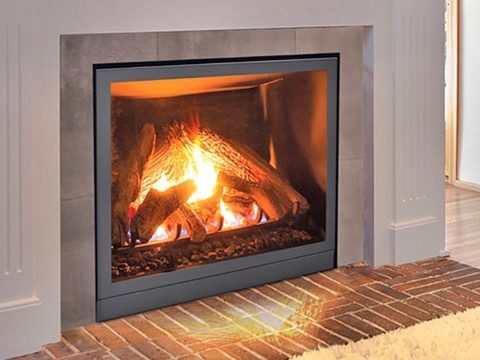
The back wall of a fireplace can look like ordinary brick while actually being a removable refractory panel made for a particular factory-built unit. If it cracks, do not assume the repair is the same as repointing a masonry firebox. In a Davie home, the first useful question is what appliance and panel are installed? The answer should come from the listing, model information and manufacturer's instructions.
A factory-built fireplace is a manufactured system. Its panels help protect the metal structure behind them and are part of its intended configuration. A masonry fireplace's firebrick and mortar belong to a different construction. Decorative brick patterns pressed into a panel can make the two look similar from a photograph. The National Fireplace Institute separates factory-built solid-fuel fireplaces from masonry construction in its homeowner information because equipment-specific details matter.
Photograph without disassembly
Take one picture of the complete opening, one of the affected panel, and one of an accessible manufacturer label or manual if you have it. Include the fireplace's age only if known from records; don't guess from the home's construction date. Describe whether the crack is a hairline, whether a piece is loose, and whether the panel is displaced. A remote picture cannot decide safe continued use or identify a compatible replacement. Leave the unit unused if material is loose, a panel is damaged, or the condition is uncertain.
Questions that change the repair scope
- Is the unit factory-built, and what is its exact make and model?
- Is a matching approved panel or manufacturer-specified replacement available?
- Does the damage extend behind the visible panel or to another part?
- Has the chimney/vent path also been evaluated where appropriate?
- If the part is discontinued, what options are actually allowed by the product listing?
A proposal to smear generic mortar over a damaged panel may hide the crack without restoring the assembly as designed. Equally, “replace the entire fireplace” is a large recommendation that needs evidence. A qualified evaluation should explain whether refractory panel replacement is appropriate, whether another component is affected, and what the manufacturer allows. Ask for the part number in the written scope when available.
Davie contains many kinds of homes; no ZIP code tells you which fireplace system sits inside. Correct identification is what turns a photograph of a crack into a useful repair conversation.
Model information can save an unnecessary trip
A provider may need to determine whether a replacement panel is available for the exact factory-built fireplace. A manufacturer name without the full model may still be insufficient; variations within a series can use different panels. If you have the manual or a label in its normal access position, send a clear photo when scheduling. Do not remove trim or work around a hot appliance to reach it. If the model remains unknown, the first visit may reasonably be for identification and evaluation, not installation of a guessed part.
Ask about the rest of the system. If a panel cracked after impact, a local replacement might address the observed damage; if other panels are displaced or the metal structure behind them is affected, the scope changes. Water entry above the firebox is yet another issue. The technician should tell you whether they could inspect behind the visible damage and what the manufacturer permits. Do not accept a generic product merely because it has a similar brick pattern.
A proposal should say whether it includes one panel, several panels, fasteners or related material, labor, and a post-installation check. If the original part is discontinued, ask for the basis for any approved substitute. “Custom cut” is not automatically appropriate for a listed unit. NFI's emphasis on listed factory-built equipment exists because the assembled system, not just an isolated tile, is what was designed to operate.
Finally, save the appliance identity and replacement part details. Next time a panel needs attention, a future technician can start from confirmed information rather than repeating the identification work. The real value of the first visit is often that clarity, even before a repair is chosen.
Further reading: NFI Homeowner Resources on factory-built systems.