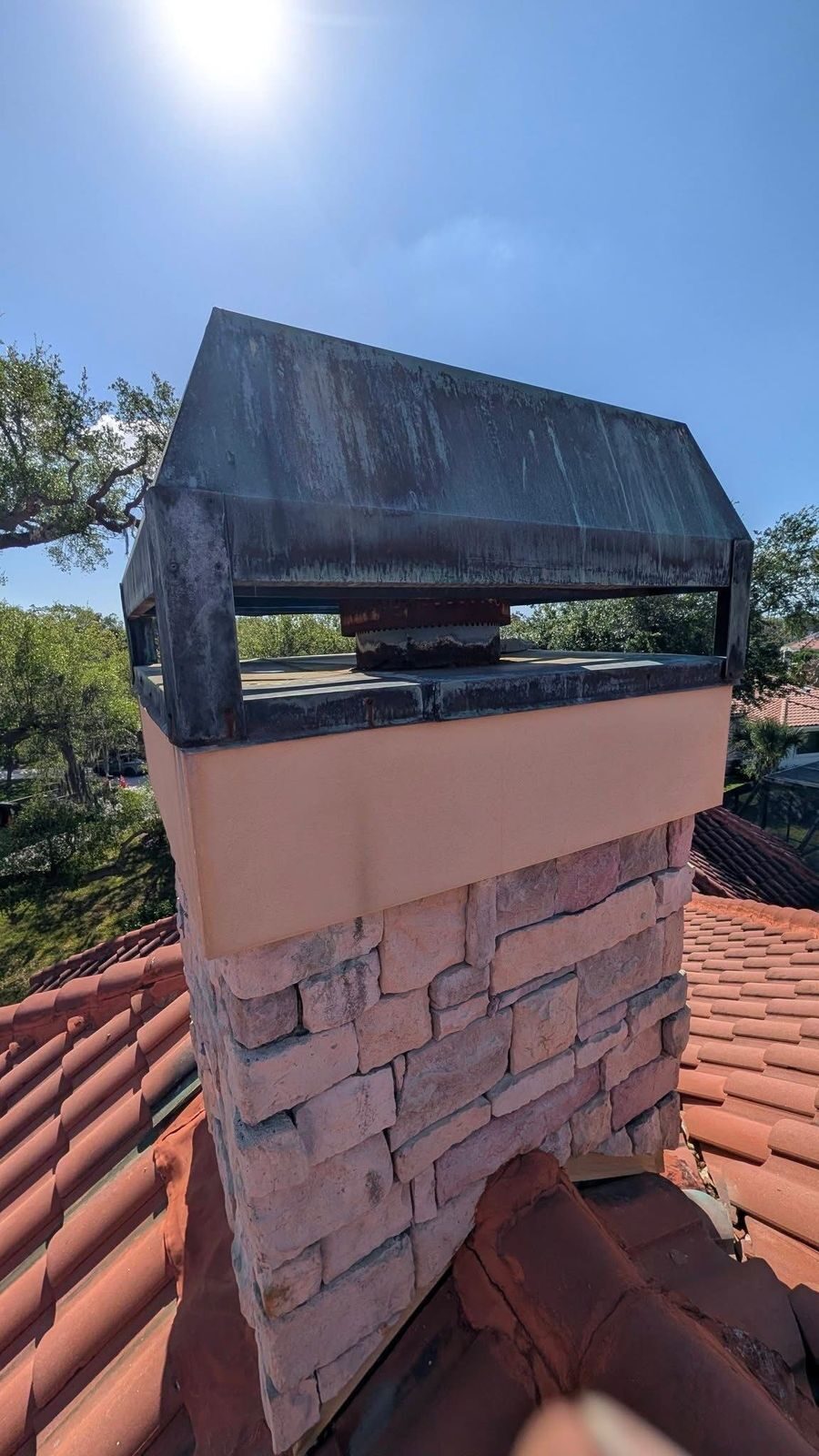
An orange streak running down the outside of a chimney chase is a clue, not a repair specification. Deerfield Beach homeowners sometimes use “chimney cap” for every metal piece at the top, yet the broad cover over a framed chase has a different purpose from the cap at the flue outlet. If the wrong piece is replaced, staining or water entry can continue.
Start with construction. A framed chase is an enclosure around many factory-built chimney systems. Its top is often protected by a formed metal chase cover; the vent passes through it. Rust could start at a cover surface, seam, collar, screw, or a different exposed metal part. Discoloration can travel down siding, so the lowest rust stain may be far from its origin. You cannot determine severity or internal damage by color alone.
A photo set that helps
Take one image of the entire chase from a safe place and one zoomed image of the top if your vantage point allows it. Record whether the stain is new, whether it grows after rain and whether you have an interior mark. If the roof was recently worked on, save that date too. Avoid climbing or touching an apparently loose cover. If metal seems displaced after wind, keep the fireplace out of use until the vent is evaluated.
For a home close to the coast, material selection deserves discussion. FEMA guidance for coastal construction describes faster corrosion of exposed metal in salt-spray environments and the importance of suitable material/fastener choices. A nearby location alone does not tell you what alloy your existing cover uses, nor does it make stainless steel automatically suitable for every system. Ask what product is compatible, how it is formed to shed water and whether the fasteners and collar will be addressed.
Questions for a chase-cover estimate
- What type of chimney and chase is this, and is the existing cover actually the source?
- Will the replacement be measured for this chase rather than ordered by a guessed opening size?
- How will the flue penetration and edges be detailed?
- Did the technician check for water staining or damage below the top?
- What related roof or siding work, if any, belongs to another trade?
The answers may point to chimney chase cover replacement, a smaller repair, or further leak investigation. Repainting over rust without finding the origin changes the appearance but not necessarily the exposure. Conversely, a stain does not automatically justify replacing the entire chimney. The objective is a documented connection between the observed source and the proposed work.
What a cover replacement should specify
A good written scope names the chase dimensions, proposed material, formed edge and slope or water-shedding detail, treatment around the vent penetration, fastening method and how adjacent siding or roof materials will be protected. The exact design belongs to the chosen system and installer, but a customer should know whether the quote is for a custom measured cover, a stock part or only a seal around an existing part. If the old metal is removed, ask whether the substrate underneath will be examined for damage before the new cover goes on.
Ask for a photograph of the existing top and an image of the completed assembly. They need not be beautiful marketing photos; they are records showing which part was addressed. If the visible rust originated from a fastener or collar rather than the main sheet, the proposal should account for it. A cover installed over damaged framing without noting the condition can conceal an important finding. Conversely, a sound chase should not be called structurally failed just because its exterior has cosmetic streaks.
An interior stain changes the job from a cosmetic rust concern to a water investigation. Tell the technician whether rain timing correlates with the mark, whether the fireplace has visible water, and whether a roofer has looked at the roof junction. The chase cover is one candidate among several. If a follow-up visit by another trade is needed, request a clear handoff note.
After replacement, keep the measurements and material description. A later owner or technician will then know which cover belongs to the system and what to inspect after coastal weather, instead of starting with the same rusty streak and no history.
Further reading: FEMA corrosion protection for coastal areas; CSIA on chimney water protection.