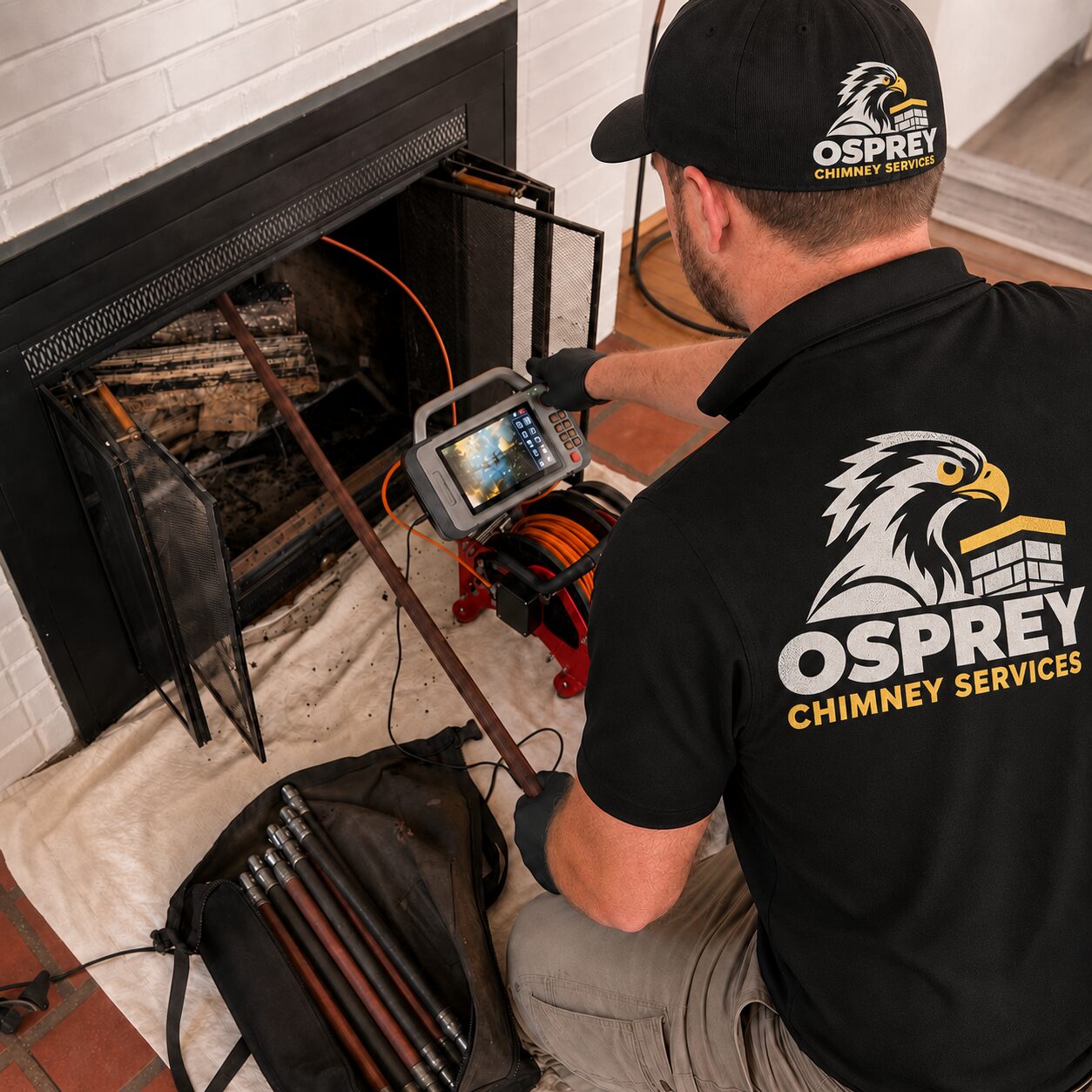
A camera is a tool, not a diagnosis. It may show a crack, gap, deposit, blockage or unusual interior condition that a view from the fireplace cannot settle. Its value comes from the question being asked, the technician's ability to interpret the image, and a report that identifies where an observation occurred. A scan should not be sold as a magic upgrade to every routine sweeping.
For a Fort Lauderdale homeowner, the first question can be simple: What are we trying to see that an ordinary accessible-area examination cannot show? A property transfer, suspected chimney fire, change of appliance, or uncertain flue condition may justify a more detailed inspection scope. CSIA's Level 2 masonry procedure describes video inspection in its examination of flue interiors. That does not make “camera inspection” and “Level 2 inspection” interchangeable labels; the latter has a defined broader scope.
Ask these four things before the camera enters the flue
- Which flue and which appliance? A home can have more than one venting path. The report should identify the fireplace or appliance being evaluated.
- Is the flue clean enough for a meaningful view? Deposits can obscure a surface. Sweeping may be recommended before evaluating condition, but the reason should be explained.
- What does the requested inspection include besides video? The firebox, accessible attic, exterior, roofline, connector or appliance may matter depending on the scope and safe access.
- What will the record show? Ask whether you will receive annotated stills or a video segment, location and description of findings, limitations, and recommended next steps.
Imagine a camera image showing a dark line. It might be a joint, shadow, deposit or defect; a still frame alone cannot reliably decide repair scope. Conversely, “looks fine on video” is not the same as checking every other part of a chimney. Context includes system construction, cleaning history and observations from accessible exterior areas. An honest report says both what was seen and what could not be established.
What changes after a finding?
The next step might be monitoring, cleaning, further evaluation, repair, or identifying a compatible liner. It should follow the evidence. If a technician recommends chimney relining, ask which defect the liner addresses, what appliance uses the flue, and what sizing/listing requirements apply. Do not choose a liner by chimney height alone. The National Fireplace Institute notes that hearth installation and venting require product-specific planning.
A Fort Lauderdale address also raises practical access questions in condos or managed properties. If roof or mechanical-room access is controlled, tell the service provider beforehand. Without access, a technician may only be able to describe a partial view. The written report should say so plainly, rather than silently imply the entire system was inspected.
A helpful chimney camera inspection gives the owner more than footage: it connects a clear question to a documented observation and a proportionate next step.
Read the footage as evidence, not entertainment
A meaningful recording needs orientation. If a scan begins at the top, does the report identify its direction of travel and approximate depth? If an image shows a joint, can the inspector explain which flue segment it belongs to and whether it is typical construction or a defect? Ask for labeled still frames of material findings, not an unlabeled thirty-minute file that a homeowner is expected to diagnose alone. A confident-sounding conclusion without location or context is less useful than an honest explanation of uncertainty.
Camera resolution and lighting have limits. Deposits can obscure surfaces, an offset can block further travel, and a camera inside the flue cannot assess every exterior flashing detail. A video is especially valuable when it documents something that changes the decision, such as the location of a suspected defect, but it should be considered alongside accessible exterior and appliance observations. The provider should identify what was not visible. A recommendation for additional access may be the right answer when imagery is inconclusive.
If repair is proposed, ask for a before-and-after plan. Will the defect be documented before work, and what form of verification is appropriate after? A homeowner is not expected to interpret code provisions from raw footage. The contractor should explain the proposed remedy, the appliance being vented and any manufacturer requirements in plain English. Keep that explanation with the video for the next owner or future technician.
This is why it helps to book a defined inspection question rather than merely “a camera.” The technology is useful when it changes what can be known about the system; it is not a substitute for the professional judgment that connects a visible condition to a decision.
Further reading: CSIA Level 2 masonry inspection procedure; NFI homeowner resources.