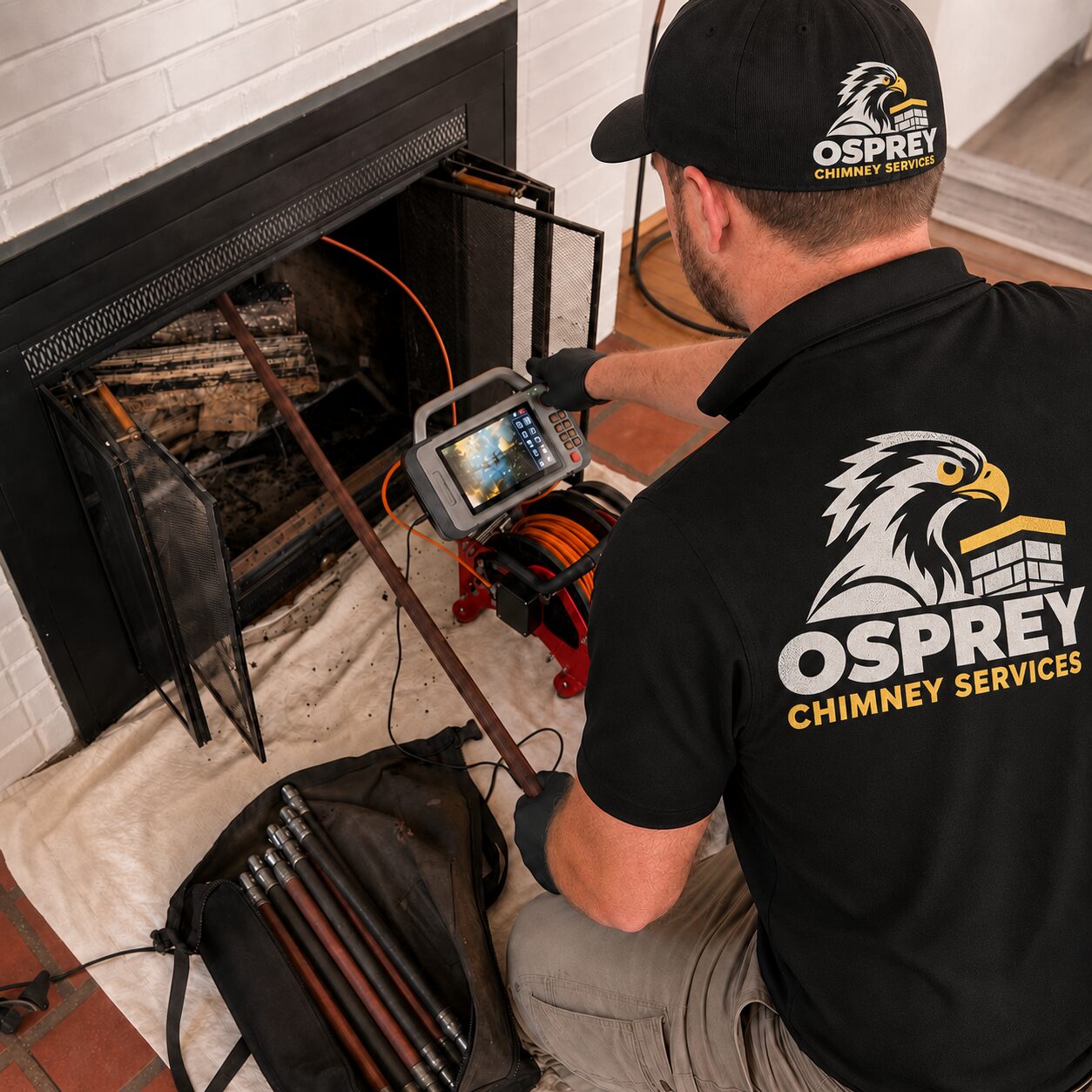
A general home inspection can note a fireplace, a visible defect or the need for specialist follow-up. It should not be treated as proof that the chimney's concealed parts have been examined. If you are buying a West Palm Beach home with a fireplace, ask specifically what chimney inspection was done, by whom, and what could be accessed.
Industry inspection terminology distinguishes a Level 1 assessment from a Level 2. A Level 1 is generally suited to routine evaluation of an existing system whose conditions and use are not changing, with an examination of readily accessible areas. A Level 2 expands the scope and commonly matters in a property transfer, after certain damaging events, or when the system or appliance changes. The Chimney Safety Institute of America describes Level 2 procedures that can include video examination of the flue; the written scope and system type still matter. Neither level means that every hidden wall cavity has been opened.
Documents worth requesting before closing
- The last chimney inspection report, including date, inspection level, system identification, findings and limitations.
- A sweeping invoice if present. It shows maintenance history, not necessarily an inspection.
- Permits or product manuals for a gas insert, factory-built fireplace or recent conversion, if they exist.
- Repair invoices identifying what was replaced. “Chimney fixed” is not enough to know whether work concerned flashing, a cap, a liner or the firebox.
- Photos of any staining, rust or roofline change, and the seller's account of when it appeared.
A useful specialist report connects observations with a recommendation. “A visible stain exists on the interior wall” is an observation. “Further roofline evaluation is needed because the top was inaccessible” is a limitation and next step. “Replace the liner” is a repair proposal that should explain the evidence and the appliance with which the liner must work. Keep those categories separate when you ask follow-up questions.
One example, clearly hypothetical
Suppose a buyer sees a fireplace that was used last winter, a cap from the driveway, and a clean mantel. The next logical question is not “Can we use it tonight?” It is “What condition and venting checks were actually performed, and did they include the flue?” A fireplace can be tidy from the room while its liner, smoke chamber or roofline still needs evaluation. On the other hand, an inspector should not prescribe a rebuild solely because the system is older. Evidence and access decide the scope.
West Palm Beach's place in South Florida means roofs can face heavy rain and storm seasons; that is context for exterior observations, not proof of a defect at the property. If the house is under contract, share the deadline with the person scheduling the Level 2 chimney inspection so there is time to obtain a report and ask questions. If that inspection type is not actually offered by Osprey, ask for a qualified specialist rather than accepting a misnamed substitute.
Put the inspection inside the purchase timeline
A purchase contract has deadlines. Before booking, tell the chimney specialist the inspection contingency date, the number of fireplaces, whether the seller will grant roof or attic access, and whether gas or wood equipment is present. Ask when the written report can be delivered; a verbal “looks okay” may not help you evaluate a repair proposal before the deadline. If an inaccessible area matters, find out whether the seller can arrange access while there is still time.
After the report arrives, separate immediate use concerns from maintenance and from optional improvements. One line might say a component should be cleaned, another might call for evaluation of visible liner damage, and a third might note that the cap was not accessible. They should not all be collapsed into “needs chimney work.” Ask for photographs labeled by location and for a description of what evidence supports each item. If costs are being discussed with a seller, use the actual written scope; a blog cannot tell you what is fair in your transaction.
Be especially careful with previous repair records. A new cap invoice does not show that a smoke chamber or flue was examined. A fresh-looking firebox does not show what is behind a factory-built panel. A recent roof replacement does not necessarily establish that chimney flashing was addressed. These distinctions are why a defined inspection can be useful even when the fireplace was described as “working” in a listing.
At closing, preserve the inspector's report alongside appliance manuals, roof records and any agreed follow-up. It becomes the baseline against which future changes can be judged. The purpose is not to make a home purchase frightening; it is to know which question has already been answered and which remains open.
Further reading: CSIA Level 2 masonry chimney inspection procedure; CSIA homeowner resources.