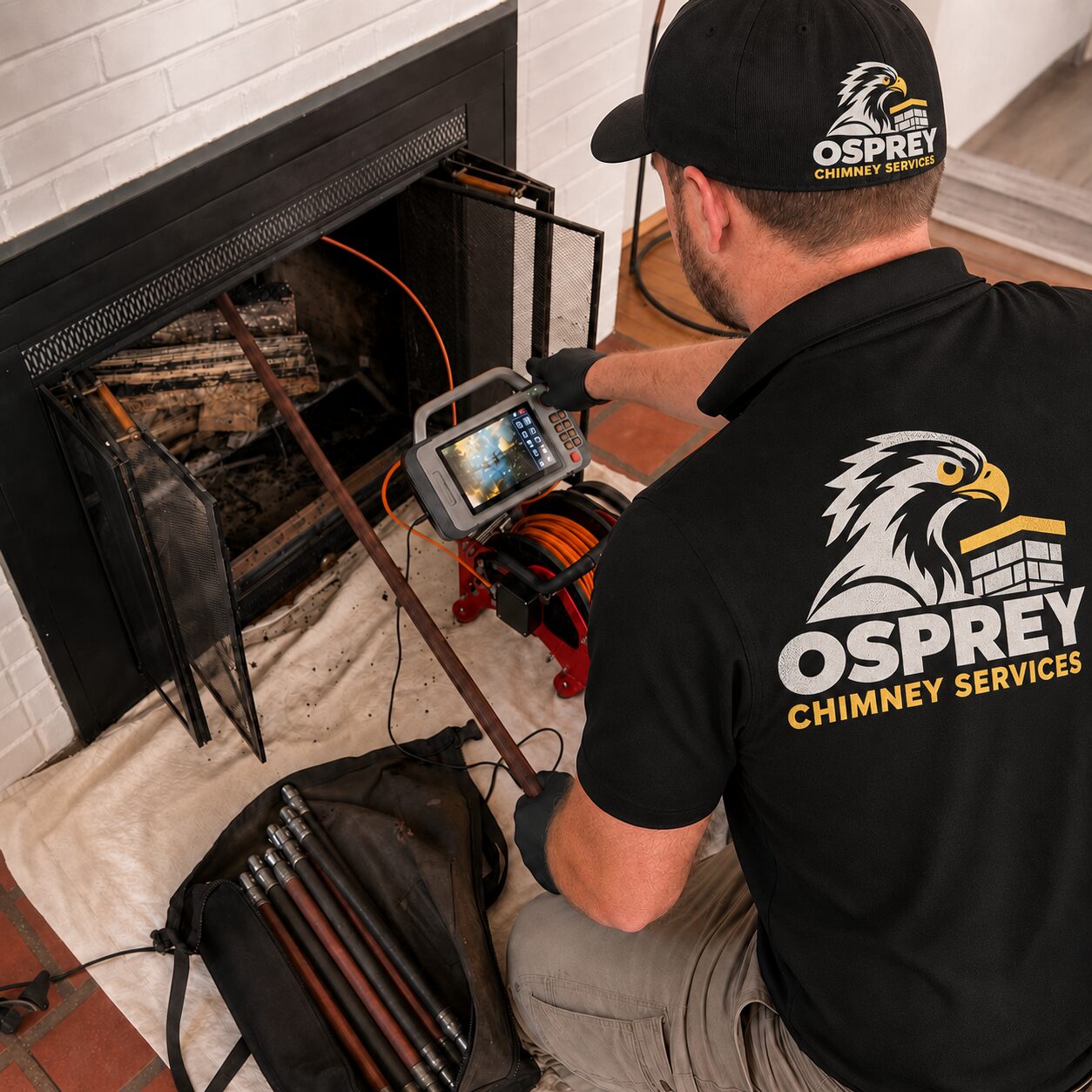
A chimney report should help you make a decision, not leave you with a page of alarming labels. Whether you own a house in Wellington, a rental in West Palm Beach or a seasonal property near the coast, separate four things on the page: what was inspected, what was observed, what could not be checked, and what the inspector recommends next. These are different kinds of information.
Start at the top. Does the report identify the address, date, appliance or fireplace, fuel type, and inspection level? If the home has two fireplaces, a description of “the chimney” may not tell you which flue was evaluated. A Level 1, Level 2, camera scan and sweeping invoice also should not be treated as the same document. CSIA publishes inspection scopes for masonry and factory-built systems; ask which one the provider used and what access was available.
Four categories, with illustrative examples
| Report wording | What it means | What to ask next |
|---|---|---|
| “Rust observed at chase-cover edge” | A visible finding, not yet a full water-source diagnosis | Where was it seen and what other parts were checked? |
| “Roof access unavailable” | A limitation on the inspection | What remains unknown and how can access be arranged? |
| “Recommend further flue evaluation” | A next step, not a completed repair | What evidence prompted it and what method is proposed? |
| “Replace damaged component” | A repair recommendation | Which component, why replacement, and are alternatives appropriate? |
These examples are invented for teaching; they are not Osprey jobs or quotations from a customer's report. Real findings need the actual system, photographs and written context. An image can document an issue but a single close-up may hide its location in the flue. Ask for a wider view or diagram if the relationship is unclear.
Questions worth asking before approval
- What was the system used for, and was it verified from a label or manual?
- Was the top, accessible attic, exterior, firebox, connector and flue examined as applicable, or were any areas inaccessible?
- Which findings affect use now, and which are maintenance items to plan?
- Why is the proposed scope a repair, cleaning, relining or further inspection?
- If water is involved, how was the entry path distinguished from the place the stain appeared?
- What is included in the proposed work and what is excluded?
- Will there be a post-work description or photographs showing what was completed?
A clear report should let you compare those answers to the chimney inspection you ordered. It should not declare that a fireplace is permanently safe or that every component will last a set number of years. If an urgent problem is identified, ask the inspector to state plainly whether the fireplace should remain out of use until evaluated or repaired. If a quote is hard to understand, request the scope in ordinary language before agreeing. That is a reasonable customer question, not a challenge to the technician's expertise.
Compare repair proposals against the finding
Two bids may use the same phrase, such as “chimney waterproofing,” while covering different work. One may include mortar repair, another may include only a surface application, and a third may assume a roofer handles flashing. Put the original inspection finding beside each proposal and mark which line actually addresses it. Ask whether the price includes access, materials, photographs and any required follow-up. The lowest number is not necessarily a comparable scope.
A priority rating should be explained rather than accepted as a mysterious color. If a report labels an item urgent, ask whether the fireplace should remain unused, whether water protection must be restored before rain, or whether a qualified gas/roofing trade must be involved. If the report labels an item routine, ask what change would make it more pressing. The document should help a homeowner plan, not simply sort problems into red and green boxes.
For a large recommendation such as a liner replacement or rebuild, request the evidence and the alternatives considered. The inspector might have observed a defect that makes a smaller repair inappropriate; that explanation belongs in writing. Equally, an inaccessible area may require further examination before a complete price can be responsible. A good report acknowledges uncertainty and states the next test or access needed.
Keep every version of the report and proposal with the property's records. If work is completed, add the final scope and photos; then ask whether a subsequent inspection is needed for the overall system. This creates a chain of reasoning from symptom to finding to repair to verification, rather than a pile of invoices with disconnected labels.
Further reading: CSIA Homeowner Resources; CSIA Level 1 inspection procedure.