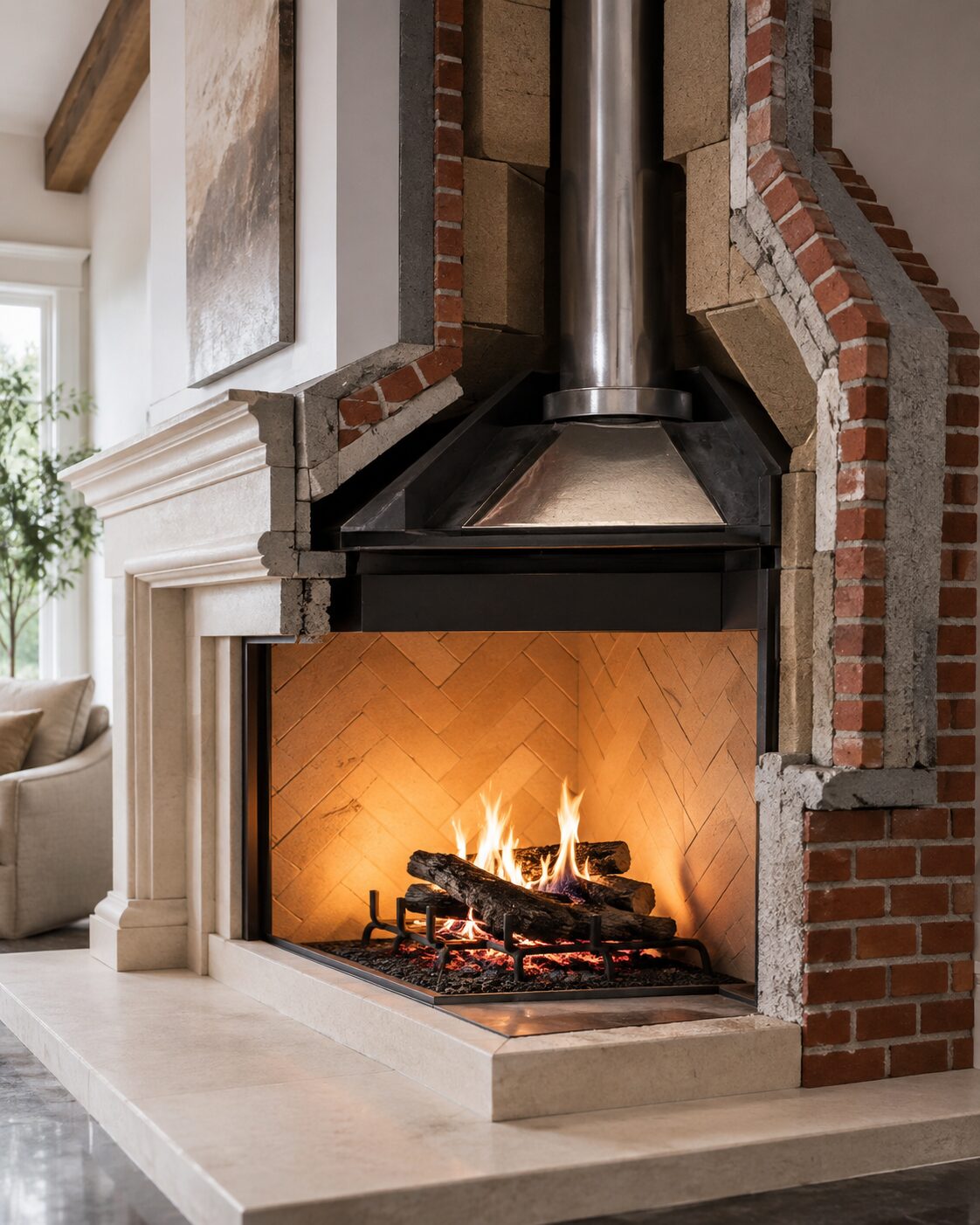
A tape measure across the fireplace opening is a useful start, but it cannot answer whether a particular insert is suitable. A Pinecrest homeowner considering a wood or gas insert needs to identify the existing fireplace, inspect the chimney or venting path, and review the selected product's instructions. The insert is an appliance, not simply a metal box that fills any opening.
The National Fireplace Institute describes inserts as a distinct category from log sets and complete fireplaces. Fit depends on more than front width: depth, height, hearth, surrounding clearances, access to the vent, fuel supply or electrical needs, and the conditions of the existing system can all matter. A factory-built wood fireplace may impose manufacturer-specific restrictions on what can be installed in it. A masonry opening raises a different set of questions. Do not cut or alter the existing appliance just to make a showroom model fit.
Prepare for an estimate without pretending to design the installation
Take a full photograph of the fireplace, visible hearth and surrounding mantel. Measure the apparent front opening for conversation, but label the number “homeowner estimate.” Locate any accessible model plate or old manual. Share the most recent chimney inspection and any known water, draft or smoke problems. Tell the installer your objective: occasional flame, room heat, easier use, or replacing a failing unit. A specific objective helps narrow product choices before detailed onsite measurements.
Ask for these items in a proposal:
- The exact insert make/model and fuel type.
- A clear statement that the existing fireplace type is approved for the proposed installation.
- The vent/liner work required by that product, if any.
- Hearth, mantel, clearance or finish modifications and who performs them.
- Qualified gas or electrical work where applicable.
- Permits and inspections required for the actual Pinecrest address, verified at the time of the project.
An old fireplace that has not been used in years may need a defined inspection before it is treated as a ready-made venting path. CSIA's guidance on appliance changes and the NFI's installation guidance both support asking this question early. Do not rely on the absence of smoke last time it was used as proof that the flue is compatible with a new insert.
A useful fireplace insert installation consultation leaves you with an appliance choice that fits the construction and a scope that names everything beyond the shiny front panel. If the preferred model cannot be installed appropriately, choosing a different product is better than forcing a poor fit.
Compare product dimensions with the real opening
Retailer diagrams usually show minimum and maximum dimensions. They may not show every constraint in your existing fireplace: a shallow firebox, irregular masonry, a raised hearth, a mantel close to the opening or a listed factory-built unit with specific limitations. Bring the diagram to the site visit and let the installer measure the actual opening and clearances. A front trim panel can hide a gap visually, but it cannot make an unsuitable vent or clearance appropriate.
Ask which existing parts remain after installation. A wood insert may require a particular chimney liner and connector. A gas insert has its own fuel and venting requirements. Both choices can interact with an old damper, smoke chamber or top protection. The chimney's previous use does not establish compatibility. An inspection report should describe the condition before the installation proposal is finalized.
The estimate should state who handles the product order, delivery, any required permit, venting, gas/electrical trade, hearth work and finish restoration. If one bidder assumes an existing gas line and another includes installing it, those quotes are different scopes. Ask what happens if an unexpected condition is found once the old fireplace is opened for work. Clear change-order terms make the project easier to manage.
After installation, keep the manual, model and venting documentation in the property file. Ask for a demonstration of normal operation and the maintenance schedule for the specific appliance. An insert changes how the fireplace works; the next homeowner should not have to infer that change from the appearance of its glass front.
Further reading: NFI Homeowner Resources; CSIA on adding a hearth appliance.