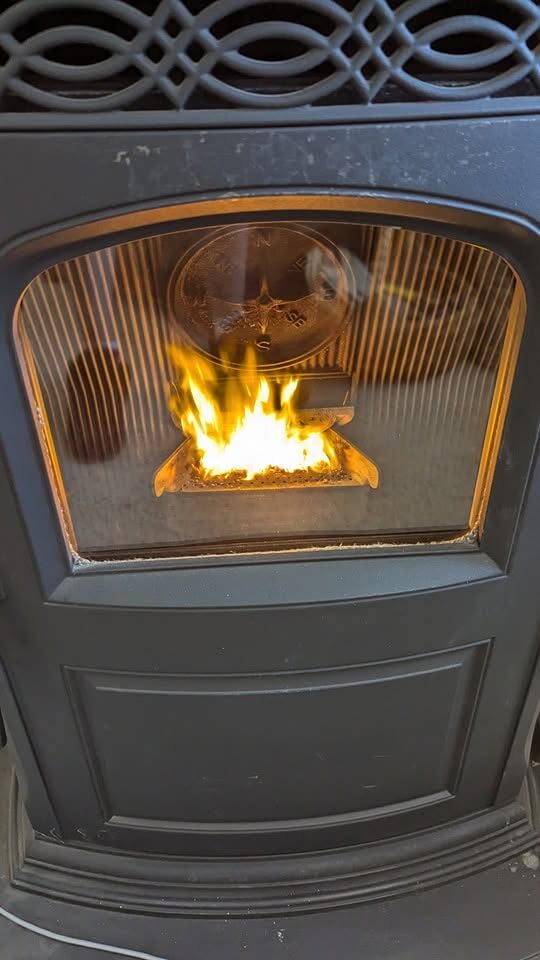
A crack in the back of a fireplace can look small in a photo and still raise a sensible question: which material is cracked? A Wellington homeowner with a masonry wood-burning fireplace may be looking at firebrick or mortar. A homeowner with a factory-built unit may be looking at a refractory panel. The repair methods are not interchangeable, and a cosmetic-looking line cannot be judged as safe from a phone picture.
Begin with system identification. Masonry firebrick is part of a constructed firebox. Mortar joins the brick. A factory-built fireplace is a listed appliance that may have replaceable panels specified by the manufacturer. The decorative brick texture on a panel is not necessarily separate individual bricks. Find the accessible model information or prior inspection report before discussing a product or patch.
A visual note, not a DIY diagnosis
Take a full image of the opening and a close-up with a familiar object for scale. Record whether the line is in a brick, along a joint, or across a larger manufactured panel; whether material is loose; whether a gap has visibly grown; and whether the fireplace was used after the change appeared. Do not scrape at the crack, remove a panel, or light a fire to observe what happens. If material is displaced or the condition is new and uncertain, keep the fireplace out of use pending evaluation.
A technician may need to check whether damage is limited to one accessible surface or relates to a larger firebox issue. Some localized masonry repairs are possible when the surrounding construction is sound. Other problems may call for firebox repair with a broader scope, and a listed unit may require a compatible manufacturer-specific part. A quote should name the component rather than simply “fix crack.”
Four questions before approving a repair
- What type of fireplace is this, and how was it identified?
- Is the crack in firebrick, mortar, refractory panel or another component?
- What can be seen behind or around the damage, and what remains inaccessible?
- How will the completed work be checked against the correct system or product instructions?
The U.S. Fire Administration and EPA advise professional chimney/fireplace inspection and maintenance because visible conditions are only part of the system. A fresh-looking mortar joint does not evaluate the flue. Likewise, replacing a panel does not automatically resolve a separate rain leak at the chimney top. Clear component names help keep the estimate and follow-up focused on what was actually found.
Use a repair map, not an alarming photo
On a printout of the wide fireplace photo, circle the affected area and number each visible crack. A line through a mortar joint is different from a broken brick, and a factory panel may have a molded joint that only resembles mortar. The map helps the technician explain what will be repaired and whether any nearby material must be removed to see the extent. Do not scrape or test a line with a tool to see whether it is “real.”
A localized proposal should identify the material and appropriate repair method, along with any excluded areas. If a technician recommends a full firebox rebuild, request the evidence showing why spot repair would be inadequate. That may be a sound recommendation; it should still be understandable. If a second provider suggests only filling the visible line, ask whether they inspected adjacent material and whether the fix matches the appliance construction. Comparing reasons is more useful than comparing adjectives such as “minor” and “severe.”
Document operating history as well. Has the fireplace had a recent chimney fire, water intrusion, unusual heat effect or impact? Do not infer cause from timing alone, but share the facts. If a piece has fallen into the firebox, keep the unit out of service. A crack can be a symptom of something beyond the visible surface, and a visual inspection has limits.
Once work is done, keep before-and-after images and the stated material used. If the unit is listed/factory-built, keep the replacement panel identification with the model manual. A future homeowner should be able to tell whether a proper component was installed instead of seeing a neat surface and assuming it has always looked that way.
Further reading: NFI Homeowner Resources; U.S. Fire Administration Heating Fire Safety.