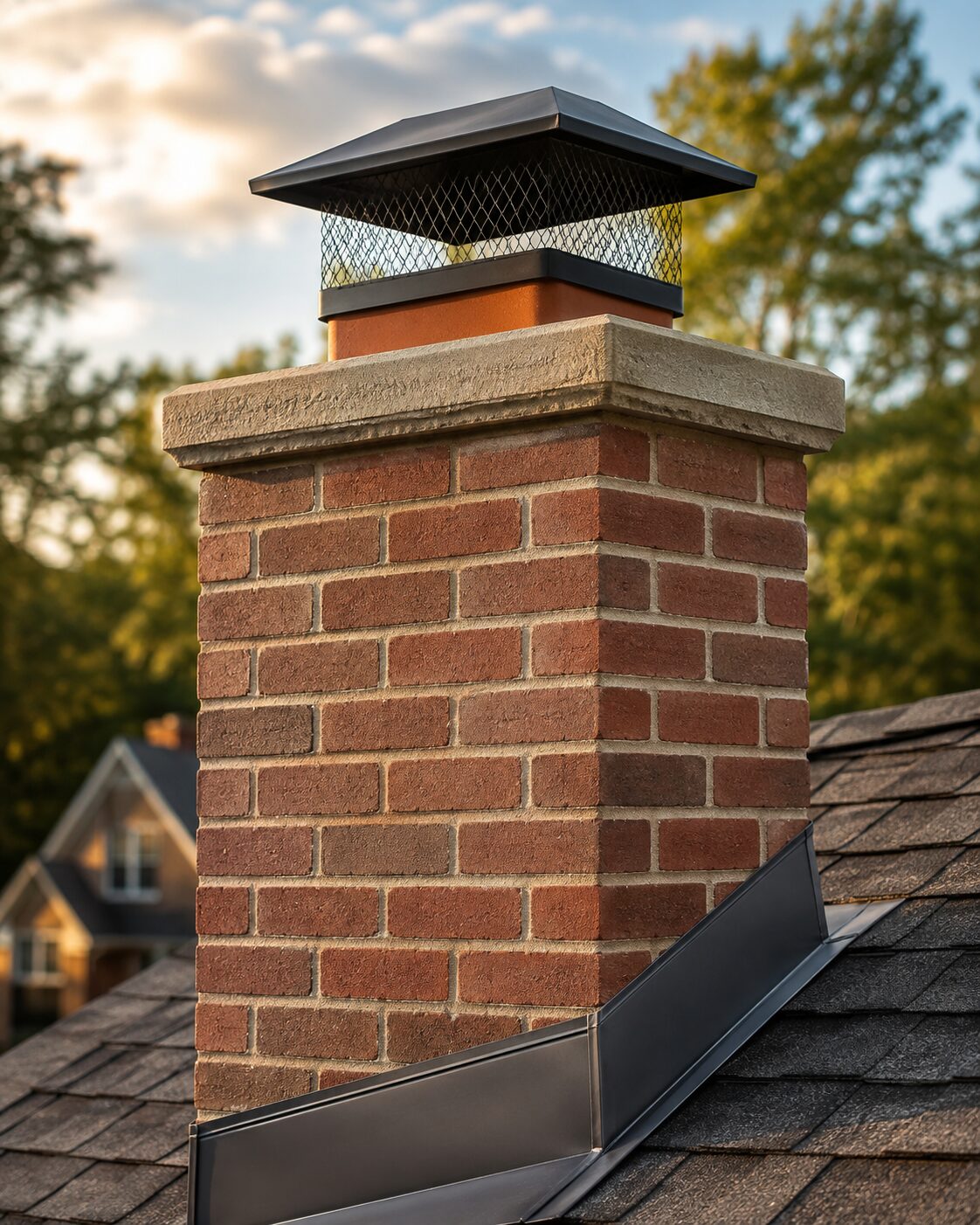
Tuckpointing (repointing) removes deteriorated mortar from the joints and replaces it with fresh mortar, restoring both the weather seal and the appearance. It matters because the joints usually fail before the brick does — and once water runs freely through open joints, it starts breaking down the brick itself, which is a bigger repair. The judgment call is whether you have failing joints with sound brick (ideal for tuckpointing) or brick that's already damaged and needs replacing too.
What homeowners notice
- Mortar you can scrape or crumble out of the joints by hand
- Visible gaps or recessed, eroded joint lines
- Damp masonry or interior staining that tracks to the chimney
- Sandy mortar residue collecting at the base
How we diagnose it
- We check whether the brick is still sound while the joints have failed
- We assess joint depth and how widespread the deterioration is
- We match mortar type and color as closely as practical
- We look at what's driving the wear — often weather exposure at the top
Your options — and their limits
Spot repointing
Renewing the worst joints where deterioration is localized.
Full repointing of exposed faces
Renewing joints across the weather-exposed portion, typically above the roof.
Repoint plus brick replacement
When some brick has already failed, we combine the two so the repair actually lasts.
What affects the price
We don't post flat prices, because an honest number depends on what we actually find. These are the factors that move it:
- How many joints and which faces need work
- Mortar matching for color and profile
- Access and height
- Whether damaged brick also needs replacing
When to stop using the system and get it evaluated
- Brick is already spalling badly — joints alone won't stop the deterioration
- There are signs of movement rather than simple weathering
How to prepare for the visit
- Photograph the joints up close so we can gauge severity
- Note whether mortar debris is accumulating
Questions homeowners ask
Tuckpointing vs. brick replacement — what's the difference?
Tuckpointing renews the mortar between bricks. Brick replacement swaps out damaged brick. Failing joints call for the first; damaged brick faces call for the second — often you need both.
Why does weather matter so much here?
The exposed top of the chimney takes sun, wind-driven rain and, near the coast, salt air. That's where joints erode first, which is why repointing usually concentrates above the roofline.
Related services
Chimney Masonry Repair · Chimney Waterproofing · Chimney Repair · Chimney Crown Repair
Serving South Florida
We provide chimney tuckpointing across Palm Beach, Broward and Miami-Dade. A few of the areas we serve:
Talk to a South Florida chimney technician
Not sure whether it's a cleaning, a repair, or something to look at before your next fire? Tell us what you're noticing and we'll help you figure out the right next step.